
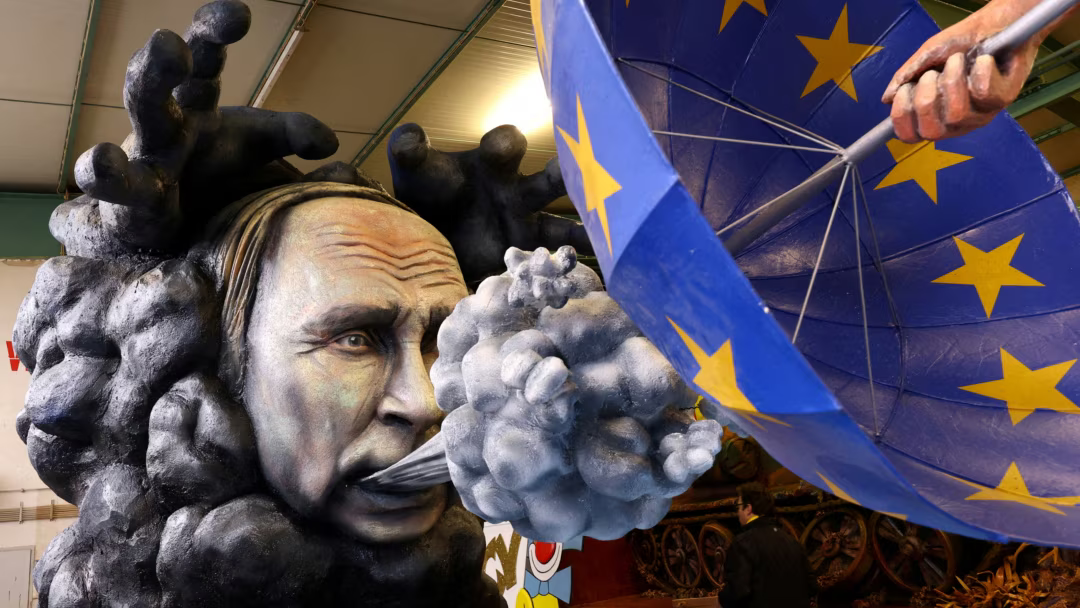
European leaders are pressing a new argument in the wake of stalled Kremlin talks: that Russian President Vladimir Putin is not merely feigning interest in peace, but actively using diplomacy as a strategic shield to prolong and intensify the conflict in Ukraine.
Following five hours of meetings between Putin and U.S. envoys Steve Witkoff and Jared Kushner, hopes for progress dimmed as neither side disclosed substantive outcomes. While Moscow characterized the talks as “positive,” European officials noted that Russia continued its assaults on Ukrainian towns even as discussions were underway.
This dual-track behavior, they argue, signals not confusion but calculated intent.
Estonian Foreign Minister Margus Tsahkna was blunt, claiming that Putin’s battlefield escalation during a supposed diplomatic opening reveals “a leader positioning for advantage, not peace.” Finland’s Valtonen echoed the sentiment, saying that Russia’s refusal to commit to even a temporary ceasefire undermines its credibility at the table.
The core sticking point remains unchanged: Russia insists on maintaining control over four partially occupied Ukrainian regions, a nonstarter for Kyiv. But European diplomats now suggest that Putin may be leveraging the deadlock itself—stretching negotiations to ease international pressure while consolidating gains on the ground.
This concern has prompted European governments to accelerate military support. New pledges from Canada, Germany, Poland, and the Netherlands aim to ensure Ukraine remains defensively strong even as the U.S. under the Trump administration shifts toward selling, rather than donating, weapons. NATO Secretary-General Mark Rutte emphasized that supporting Ukraine militarily is essential “to ensure that peace talks aren’t just a stage for Russian maneuvering.”
Meanwhile, on the battlefield, Russia launched more than 100 drones overnight, killing civilians in Ukraine’s Dnipropetrovsk region and igniting an oil depot fire inside Russia after debris fell from intercepted Ukrainian drones. The violence highlights a war that continues to expand in scope, even as diplomats trade statements abroad.
For Europe, the emerging conclusion is stark: Putin’s diplomacy may not be aimed at ending the conflict, but at shaping it on his own terms. And until Moscow demonstrates meaningful shifts in its military posture, European leaders say they will treat peace gestures not as progress—but as strategy.